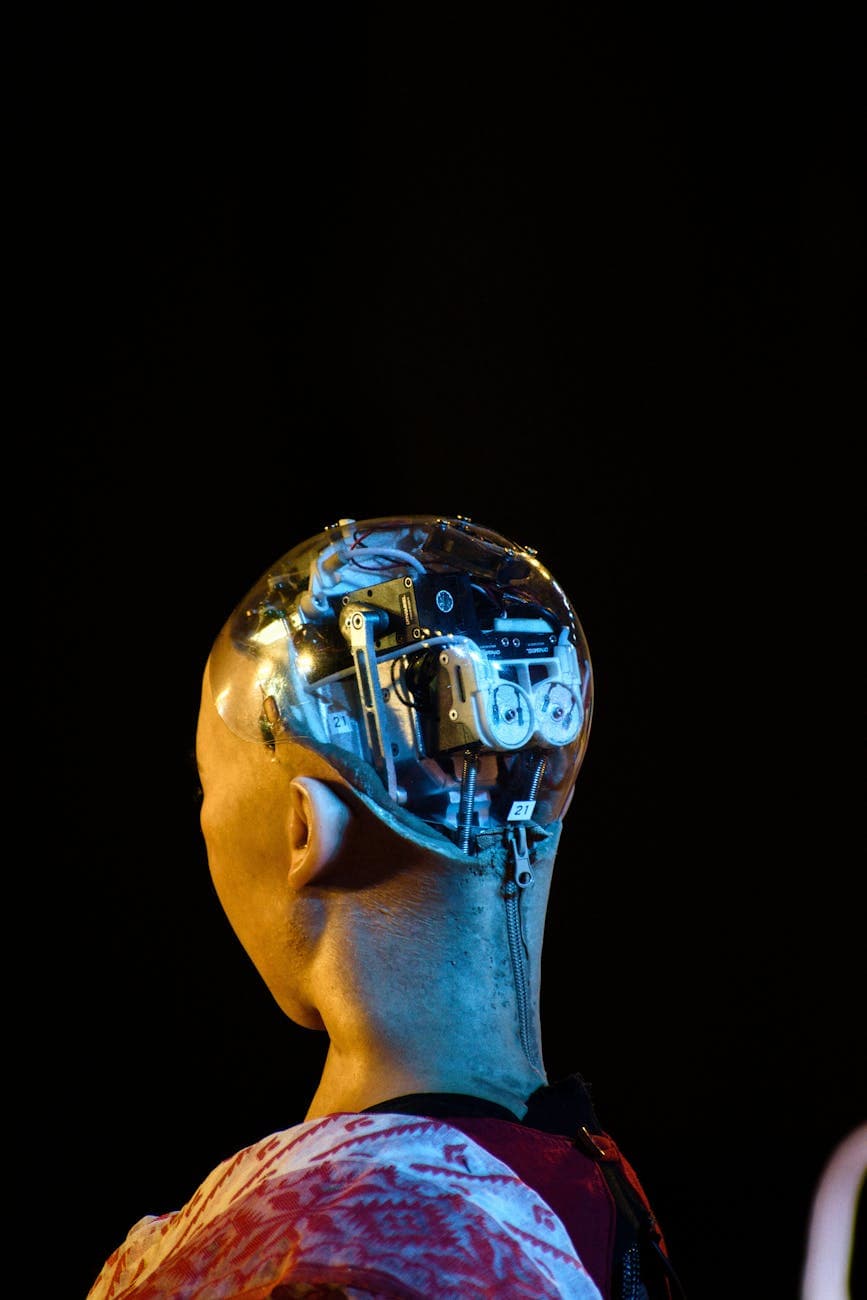
Blueprint: Integrating Claude, Gemini, and Grok into Enterprise Apps
Enterprises don't need another demo; they need reliable outcomes. This blueprint shows how to wire large language models into production, with a bias toward C# .NET application development and the realities of security, cost, and maintainability.
Reference architecture
Stand up a dedicated LLM service layer, not ad hoc calls from product code. The minimal components are:
- API Gateway: broker requests, enforce auth, route by tenant and use case.
- Orchestrator: a lightweight agent runtime hosting planners, tools, and policies.
- Model Router: selects Claude, Gemini, or Grok based on task, latency, and cost.
- Vector Store: enterprise RAG using Azure Cognitive Search or Pinecone with tight ACLs.
- Tooling: HTTP connectors, SQL, SharePoint, Jira, Salesforce; all tool calls are audited.
- Observability: structured logs, token metrics, traces, prompt/version lineage.
- Safety: input redaction, output filters, jailbreak detection, content policy checks.
Model strategy that respects reality
Claude excels at long-context reasoning and compliance tone; Gemini shines for multimedia and Google ecosystem; Grok delivers brisk latency and current-events synthesis. Treat them as interchangeable workers behind clear contracts. Use a policy like "reasoning-first to Claude, retrieval-heavy to Gemini 1.5, rapid Q&A to Grok," and override per tenant or SLA.

Pragmatic .NET integration
Keep your application thin and your agent service opinionated:
- Define IAgentOrchestrator, IToolRegistry, and IModelClient interfaces in a shared package.
- Expose gRPC endpoints for chat, tool execution, and streaming tokens; clients remain testable.
- Publish tasks over a message bus (Service Bus, Kafka). The orchestrator claims, plans, and executes.
- Use dependency injection for model clients so environments swap between Claude, Gemini, and Grok.
- Persist prompts, tool specs, and policies as versioned JSON; load at startup, hot-reload via events.
- Wrap prompts in deterministic templates; parameterize with user, locale, sensitivity level, and SLA.
- Ship a canary .NET console that replays transcripts and validates latency and cost budgets.
AI agent development patterns
Great agents are boring: predictable, observable, and tool-centric.

- Plan-then-act: one step to propose tools and a budget, another to execute. Stop early on confidence.
- Tool registry: every connector declares schema, auth, rate limits, and PII fields; the model only sees contracts.
- Memory: split working memory (per task) from knowledge (RAG) and audit logs (immutable).
- Fallbacks: if tool fails, backoff and reroute to cached summaries; if model fails, retry on next best.
- Guarded autonomy: hard ceilings for tokens, spend, and steps. Require approvals when thresholds hit.
Data governance and security
Run a redaction pre-processor to remove PII before model calls; put the clean output through RAG to rehydrate facts. Store embeddings in a tenant-scoped index. Encrypt everything at rest, and sign responses with a content hash. Maintain a prompt registry, a policy registry, and a test corpus with real red-team prompts.

Performance and cost
- Cache aggressively: semantic cache for answers; TTL based on source freshness.
- Batch embeddings; use streaming tokens for UX, not whole-message waits.
- Apply structured reasoning only when needed; short tasks should use concise prompts.
- Track cost per feature and tenant; fail open with graceful degradation when quotas near limits.
Organization and sourcing
You'll need three roles: platform (orchestrator and infra), experience (app integration), and governance (risk, policy, evaluation). IT staff augmentation providers can fill gaps quickly while you upskill. For vetted talent, slashdev.io supplies senior engineers and agency leadership to accelerate delivery without locking you into a monolith vendor stack.
Case snapshots
- Support triage: RAG over past tickets plus product docs, Gemini for extraction, Claude for empathetic responses; first-response time cut by 48%, deflection up 22%.
- SEO insights: Grok for trend mining, Claude for long-form briefs, tools to crawl Search Console and analytics; weekly content plans generated in minutes with human approval gates.
- Compliance QA: Claude reviews policy diffs, cross-checks with RAG from legal wiki, flags risky language; audit time down 35% with better traceability.
90-day execution plan
- Days 0-30: stand up the LLM service, ship the canary, integrate one tool, define evaluation metrics (accuracy, latency, unit cost).
- Days 31-60: wire RAG, add two models, productionize logging and policy registries, onboard the first pilot feature.
- Days 61-90: expand toolset, enable model routing, institute SLOs, roll to two additional business lines with playbooks.
Finally, bake evaluations into CI: regression suites, synthetic users, golden datasets, and human review gates tied to release trains automatically.
The payoff isn't magic; it's leverage. When you treat models as swappable components, pair them with disciplined C# .NET application development, and adopt repeatable AI agent development patterns, your teams ship faster with less risk. Start narrow, measure relentlessly, and let results, not hype, drive the roadmap.