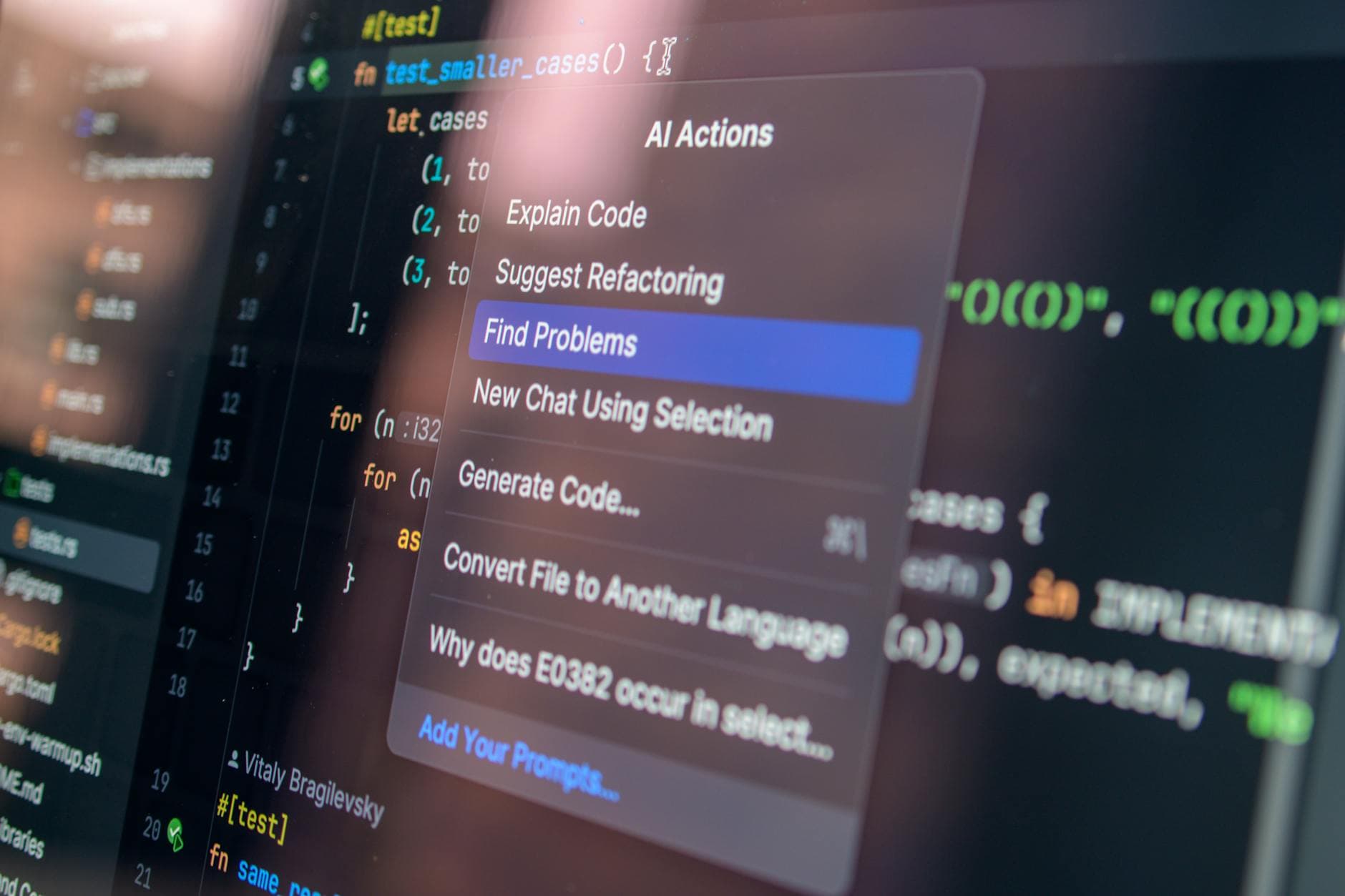
MVP paths: AI, no-code, and low-code
Choosing the right build path shapes speed, risk, and future flexibility. AI-assisted coding accelerates developers with smart scaffolds. No-code empowers domain experts to ship workflows. A low-code AI platform blends both, giving visual assembly with programmable escape hatches and LLM-native features.
Choose AI-assisted coding when
- Your team writes APIs and needs type-safe models, tests, and CI from day one.
- Requirements are fluid; you'll refactor aggressively and want AI to suggest patterns, not boxes.
- Regulated data demands explicit code reviews, linters, and reproducible builds.
Choose no-code when
- You must validate value props fast: forms, approvals, email/SMS, dashboards.
- Non-technical owners can map workflows and maintain them without dev tickets.
- Integration needs are shallow: REST hooks, spreadsheets, CRMs, webhooks.
Choose a low-code AI platform when
- You need visual UI, data connectors, and server actions with optional code blocks.
- Generative features are core: retrieval, summarization, and agents with guardrails.
- You want a Retool alternative that adds vector search, prompt versioning, and policy controls.
Case snapshots
- Fintech ops dashboard: Low-code AI platform pulled KYC data, added anomaly prompts, exported to Slack. Time-to-first-ops: 6 days.
- Healthcare intake: No-code built HIPAA-safe forms via a compliant vendor; later, AI-assisted coding produced an audited FHIR API. Split saved rework.
- B2B SaaS analytics: AI-assisted coding generated a typed data layer and Playwright tests; kept perf predictable under bursty API load.
- Internal admin tools: Chose a Retool alternative with row-level security and Python actions to avoid rebuilding later.
Cost, risk, and time math
Quantify: hours to first user, change cost after week four, and risk of lock-in. If >40% of scope is glue work, favor no-code; if >40% is custom logic, favor AI-assisted coding; if mixed, go low-code AI.

Implementation playbooks
- AI-assisted coding: Define contracts first. Use AI to stub endpoints, tests, and docs. Enforce typed schemas and add observability early.
- No-code: Start with a sandbox tenant. Model the workflow before data. Gate launch behind audit logs and usage alerts.
- Low-code AI platform: Treat prompts as code. Version datasets, throttle APIs, and add human-in-the-loop for critical actions.
Avoid common traps
- Shadow IT: centralize credentials, rotate keys, and monitor connectors.
- Prompt drift: freeze versions tied to releases and test on golden datasets.
- Scaling cliffs: rehearse load with synthetic traffic; watch rate limits.
Final checklist
- Who maintains it in month three?
- What's the exit if you outgrow the stack?
- How will you measure learning per week shipped?
For enterprises, pick the smallest bet that proves value: start with no-code, graduate to a low-code AI platform, and harden with AI-assisted coding where APIs and compliance matter most. Treat "Retool alternative" as a capability checklist, not a brand, and optimize for learning speed over perfect architecture in early MVPs.